Quick answer: A self-watering pot holds water in a sealed reservoir and lets a wick draw up only what the compost pulls. That suits thirsty plants, holiday cover and anyone who waters irregularly. It suits succulents, cacti and orchids badly, because they need to dry out completely.
I was sceptical about these for years, on the grounds that anything marketed as effortless usually is not. I was partly wrong.
How they actually work
The name is misleading. A self-watering pot does not water the plant. It holds a supply and lets the plant take from it.
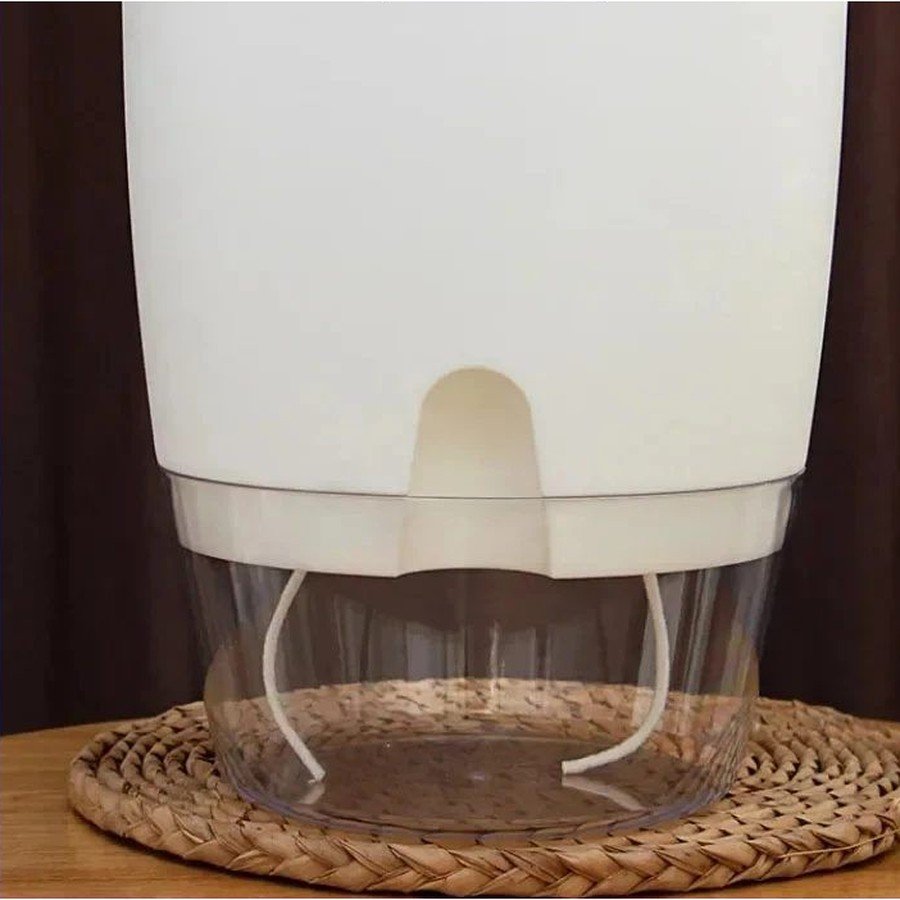
There is a reservoir at the base, separated from the compost. A wick or a column of compost dips into it, and water travels up by capillary action only as fast as the compost above dries out.
So the compost stays evenly moist rather than swinging between soaked and bone dry. That is the whole proposition, and it is a genuine one.
Crucially the roots are not sitting in the reservoir. That is what separates a proper self-watering pot from a saucer left full, which is just a slow way to rot a plant.
Who they suit
People who water irregularly. The most honest use. If your watering is feast and famine, a reservoir evens it out — the forgetful gardener pot is named for exactly that.
Thirsty plants. Ferns, peace lilies, calatheas and most tropical foliage all want consistent moisture and suffer from drying out.
Anyone who travels. A full reservoir covers a fortnight away comfortably.
Balcony troughs. Shallow containers in wind dry out daily in summer, and a reservoir halves the work — a self-watering trough is the sensible answer there, as the balcony guide covers.
Larger plants. A big pot with a reservoir is far more forgiving than a big pot without one, because large containers dry unevenly.
Who they do not suit
Succulents and cacti. These need to dry out completely between waterings. A pot designed to keep compost evenly moist is precisely wrong — the succulent guide explains why.
Orchids. They want air around the roots and a bark medium, not moist compost. There are self-watering designs made for them, such as this one, which keep the reservoir well clear — but a standard self-watering pot is wrong. The orchid guide covers what they actually need.
Anything you have already rotted. A plant recovering from root rot needs to dry out, not to be kept moist.
Using one properly
Water from the top for the first few weeks. The roots have to grow down to reach the wick before the reservoir does anything, and filling it immediately just leaves water sitting there.
Let the reservoir empty completely before refilling. A brief dry period lets air back into the compost, which roots need.
Flush from the top occasionally — every couple of months, water heavily from above so salts wash out. In a closed system, mineral salts accumulate, which is the one genuine maintenance issue.
Check the overflow. Most have one; if yours does not, do not leave it outside in rain.
Watering globes and stakes
Related but different. Globes and terracotta stakes release at a rate that depends on how dry the compost is and how well seated they are, which makes them good holiday cover and unreliable as a permanent system.
The honest summary
Not magic, and not a substitute for understanding a plant. But for the right plant and the right person they remove the most common cause of houseplant death, which is inconsistent watering.
Browse the self-watering range, with more in the outdoor planter range and the care guide.
One caveat worth stating plainly: do not put a succulent in one. Snake plants, ZZ plants and cacti need to dry out completely, and a reservoir removes the one condition they depend on.
The short version
- A reservoir sits below the compost and a wick draws up only what the compost pulls.
- The roots never sit in water, which is what separates these from a saucer left full.
- They suit thirsty plants, irregular waterers, travellers and windy balcony troughs.
- They suit succulents, cacti and orchids badly, because those need to dry out completely.
- Water from the top at first, let the reservoir empty between fills, and flush salts occasionally.
Frequently asked questions
How do self-watering pots work?
A sealed reservoir at the base holds water, and a wick or column of compost dips into it. Water travels up by capillary action only as fast as the compost above dries, so the roots never sit in standing water.
Which plants suit self-watering pots?
Thirsty plants that resent drying out: ferns, peace lilies, calatheas and most tropical foliage. They also suit anyone who waters irregularly, people who travel, and shallow balcony troughs that otherwise dry out daily in summer.
Can I use a self-watering pot for succulents?
No. Succulents and cacti need to dry out completely between waterings, and these pots are designed to keep compost evenly moist. It is one of the few situations where the technology works directly against the plant.
Should I fill the reservoir straight away?
No. Water from the top for the first few weeks so roots grow down towards the wick. Until they reach it the reservoir does nothing except sit full. After that, let it empty completely before refilling so air gets back into the compost.
Do self-watering pots need any maintenance?
One thing: flush them from the top every couple of months by watering heavily from above so mineral salts wash through. In a closed system salts accumulate over time, which is the main long-term issue with these pots.