Quick answer: Decide in this order: size, drainage, then material. Size the pot three to five centimetres wider than the current one, insist on a drainage hole or plan to use a cover pot, and pick the material to match how often you actually water. Looks come after all three.
I style homes for a living, so I am the last person who will tell you looks do not matter. But if you choose a pot on looks first, you end up with a lovely pot and a dead plant.
Three decisions, in this order.
1. Size
The one that does the most damage when it is wrong.
Go up three to five centimetres in diameter from the pot the plant is in now. Not more. A small root ball in a large pot is surrounded by wet compost nothing is drinking from, and that is how plants rot — the sizing guide explains the mechanism, and the cm chart gives you the standard ladder.
Remember pot size means the diameter across the inside of the rim. And if the plant is staying in its nursery pot inside something decorative, you only need one to two centimetres of clearance.
2. Drainage
Not negotiable for most plants, and easy to get wrong because plenty of good-looking pots have no hole at all.
Either buy a pot with a drainage hole and a saucer, or buy the pot you love and use it as a cover pot with a plain nursery pot inside. Both work. What does not work is planting straight into a sealed pot and hoping — the drainage guide is blunt about why.
On anything over about 20cm, look for more than one hole. And empty the saucer, every time — the saucers guide covers what goes underneath.
3. Material
Now you can choose, and the honest question is how often you actually water.
| If you... | Choose |
|---|---|
| Tend to overwater | Unglazed terracotta - it breathes |
| Forget to water | Glazed ceramic, plastic or self-watering |
| Want it outside all year | Frost-proof stoneware, fibreclay or good plastic |
| Need to move it | Plastic or fibre, inside a basket |
| Have a tall, top-heavy plant | Anything heavy, low down |
The materials comparison sets the three main options against each other, and the materials guide adds metal and wood.
Then, and only then, looks
With those three settled you usually have a shortlist rather than an open field, which makes the aesthetic choice easier rather than harder.
My rule for a room is two or three finishes total: one neutral, one natural texture, one accent. Repetition reads as deliberate; six unrelated pots read as accumulation — the styling guide makes the case properly.
The checks people skip
- The base. Unglazed or completely flat bases mark wooden floors. A foot ring solves it, or pot feet.
- Weight. Can you carry it up the stairs full?
- Whether a saucer is included. Frequently not — matched sets avoid the problem.
- Stability. Push the plant gently sideways. If it rocks, it will go over.
A shortcut that works
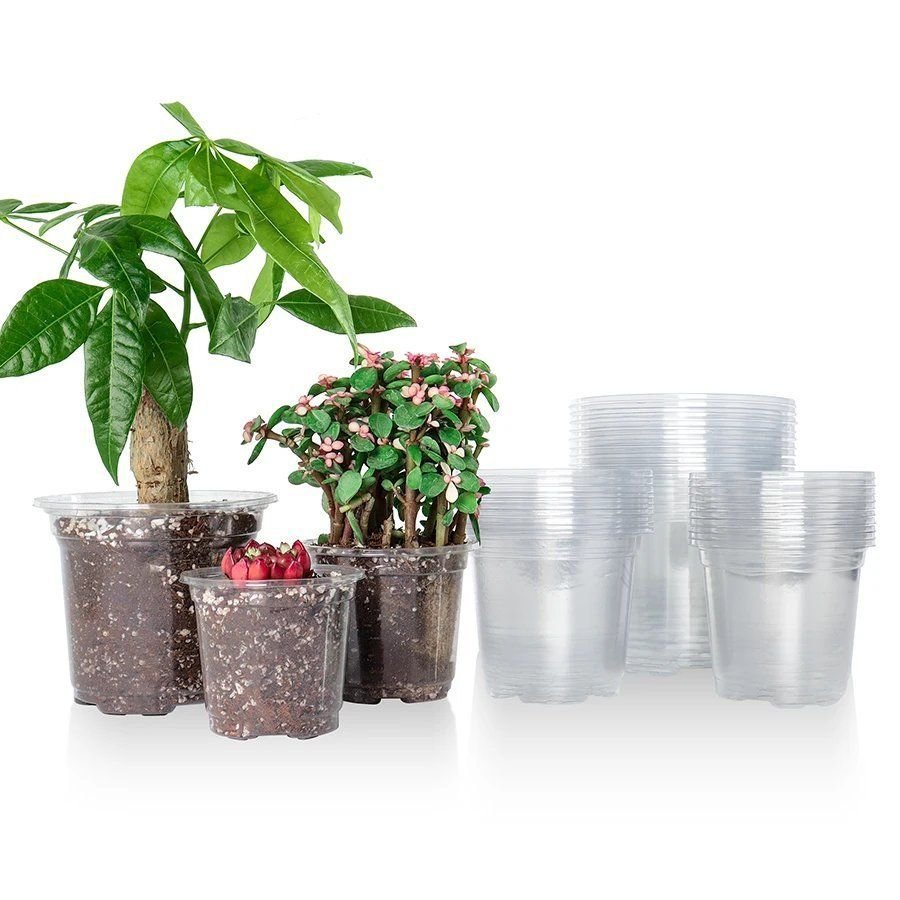
Buy a plain nursery pot in the right size with proper drainage, and a decorative cover pot you actually like. You have then separated the horticultural decision from the aesthetic one, and you can change your mind about the second without disturbing the plant.
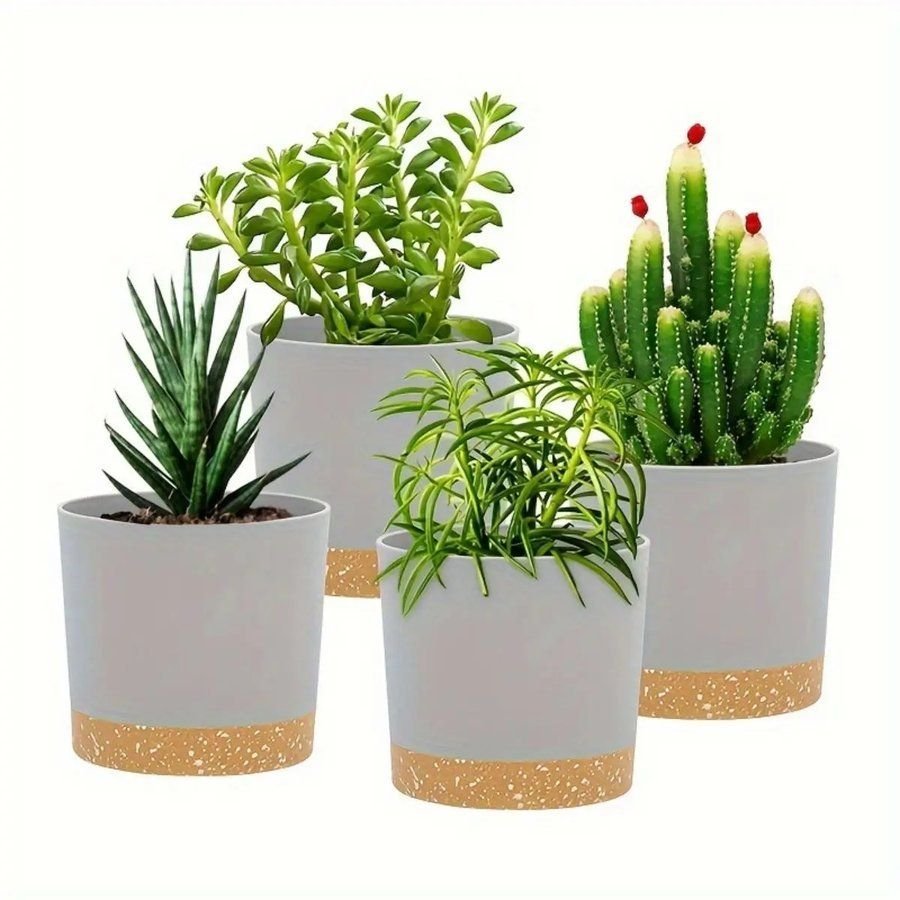
A set of clear nursery pots costs very little and lets you see the roots. Then browse the full range for the outside, or a matching quartet for a windowsill. More in the buyer's guide.
The short version
- Decide size, then drainage, then material - and only then how it looks.
- Three to five centimetres wider than the current pot; one to two for a cover pot.
- Either buy drainage or plan to use the pot as a cover. Do not plant into a sealed pot.
- Choose material by how often you actually water, not by how it photographs.
- Separating the nursery pot from the decorative one lets you change your mind later.
Frequently asked questions
What should I consider first when choosing a plant pot?
Size, because getting it wrong does the most damage. Go three to five centimetres wider than the current pot. Then check drainage, then choose the material to suit how often you water. Appearance is the last decision, not the first.
Does a plant pot have to have a drainage hole?
For most plants, yes, unless you use it as a cover pot with a properly drained nursery pot inside. Planting directly into a sealed pot leaves water at the base with nowhere to go, and roots sitting in it rot within weeks.
Which pot material should I choose?
Match it to your watering habits. Unglazed terracotta breathes and suits people who overwater. Glazed ceramic, plastic and self-watering pots hold moisture and suit people who forget. Outdoors, choose frost-proof stoneware, fibreclay or good plastic.
How do I stop a pot marking my floor?
Check the base before you buy. An unglazed or completely flat base traps moisture against the surface underneath. A raised foot ring solves it, and pot feet do the same job for a few pence on anything heavy.
Is it better to buy one pot or a nursery pot plus a cover?
A nursery pot inside a decorative cover separates the horticultural decision from the aesthetic one. The plant gets correct drainage and sizing, and you can change the outer pot whenever you like without disturbing the roots.