Quick answer: A wall bracket pulls hardest at its top fixing, because the pot sits out on a lever arm. Keep the pot close to the wall, use two fixings into something solid, and protect the wall behind from constant damp. Renters can use freestanding units instead of drilling.
Walls are the biggest unused growing surface in a flat, and the one where the physics is least obvious.
Wall planters fail differently
A hanging pot pulls straight down on a ceiling hook. Simple.
A wall bracket does something else. The pot sits out from the wall on an arm, so the weight tries to rotate the bracket away from the wall. That puts the top fixing in tension — it is being pulled out of the wall, not pushed down.
Which means two things. Keep the pot as close to the wall as the plant allows, because a shorter arm means less leverage. And use at least two fixings, into a stud, masonry or a properly rated plasterboard anchor.
Weigh the pot wet. Saturated compost roughly doubles the dry weight.
Protect the wall
The part people discover late, especially in a rental.
Anything watered against a wall gets the wall damp over months. Plaster stains, paint blisters, and in a kitchen or bathroom you get mould.
Leave an air gap where you can — a batten or spacer of a centimetre is enough for air to move and the wall to dry. Water pots by taking them down, or use planters with a solid back and an integral reservoir.
Same principle as a full green wall, and the vertical garden guide goes into it further.
Types that work
Brackets plus your own pot. The most flexible: you choose the pot, and can change it. Iron brackets take real weight. Pair them with something light, because bracket capacity is the constraint.
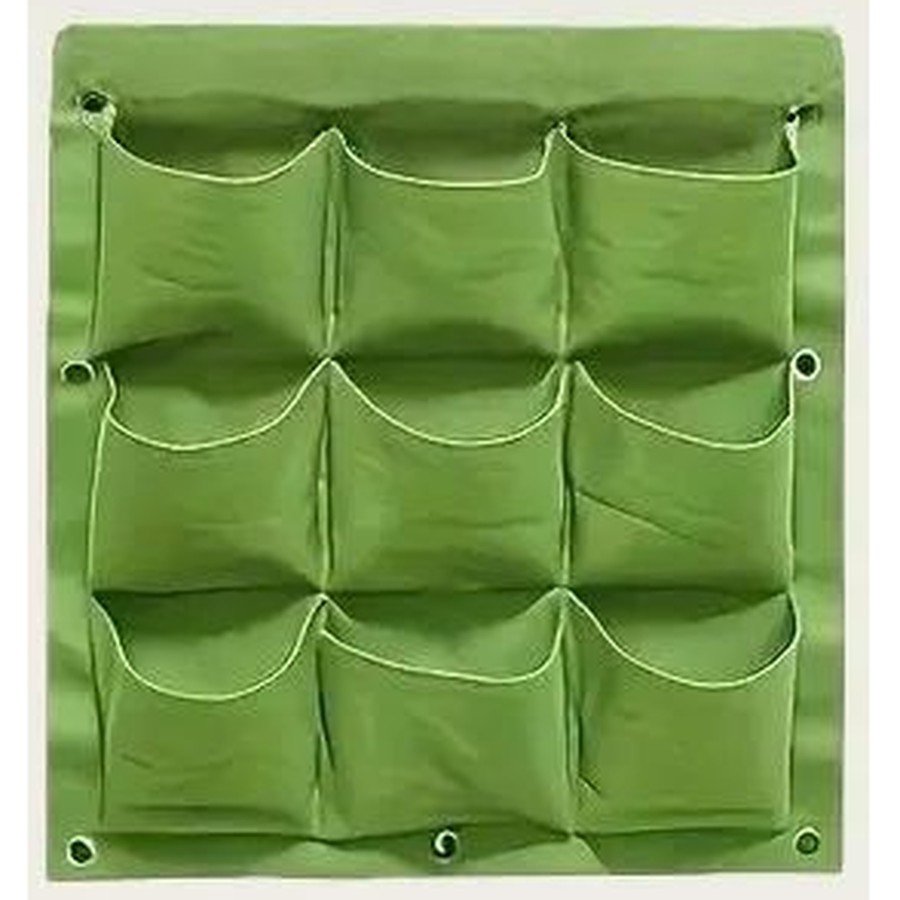
Modular wall planters. Several pockets on one panel, one set of fixings. A vertical planter is the highest plants-per-fixing option, at the cost of uneven watering top to bottom.
Half-pots and wall troughs. Flat-backed, so they sit tight to the wall — the shortest lever arm and therefore the kindest to the fixing.
Baskets on brackets. The traditional outdoor answer. A straw basket weighs almost nothing empty, which leaves more capacity for compost.
Spacing and height
Above eye level makes a room feel taller and keeps pots out of the way of shoulders and doors.
If you are mounting several, keep the spacing consistent and stagger them rather than lining them up in a grid — a straight grid reads as storage, a stagger reads as planting.
Allow for growth. A trailing plant will hang half a metre or more within a season, so do not mount one where it will end up in a doorway.
Watering
The reason wall planters get abandoned. They dry out fast, being exposed on several sides, and they are awkward to reach.
Take the inner pot down to water where you can. Where you cannot, a long-spout can helps, and a reservoir helps more — self-watering pots are a genuine fit here.
Put something under the whole arrangement to catch drips, especially indoors — the saucers guide covers what.
If you rent
Do not drill without checking the tenancy. A freestanding shelf unit against the wall gets you most of the effect with no holes, and it moves with you — the approach in the small flats guide.
Fixings, and the weight people underestimate
The number that catches people out is the soaked weight. A hanging basket roughly triples in weight when watered, because compost holds several times its dry weight in water. A 35cm basket that felt like five kilos in the shop is fifteen on the wall after rain.
Plasterboard fixings are rated for static loads in dry conditions and a swinging watered basket is neither. Anything over about 30cm wants a joist or a masonry fixing. It is worth finding the joist properly rather than hoping, because the failure mode is the whole thing coming down.
The other practical constraint is reach. A basket you cannot water easily is a basket that gets watered badly. Small baskets in an exposed spot can need water twice a day in summer, and that is usually what kills them rather than anything about the planting.
What a hanging fixing has to hold
Fixings fail when wet weight is underestimated. Size the bracket for a soaked pot, not the one you lifted in the shop.
| Basket size | Dry weight | Soaked weight | Fixing |
|---|---|---|---|
| 25cm | 2kg | 6kg | Plasterboard anchor fine |
| 30cm | 3.5kg | 10kg | Anchor rated 15kg+ |
| 35cm | 5kg | 15kg | Into a joist or masonry |
| 40cm | 8kg | 24kg | Masonry fixing only |
| Wall trough 60cm | 9kg | 27kg | Two masonry fixings |
Mistakes worth avoiding
- Using a pot with no drainage so it becomes a sealed bucket above head height.
- Hanging heavy ceramic where a lighter planter would do the same job.
- Fixing into plasterboard with the dry weight in mind rather than the soaked weight.
Doing it in practice
Work out the soaked weight first, which is roughly three times the dry weight, and size the fixing for that rather than for what you are holding in the shop.
Find a joist or go into masonry for anything over about 30cm. Plasterboard anchors are rated for static dry loads, and a watered basket swinging in wind is neither.
Hang it where you can actually reach it with a can. A deeper basket with a liner holds water far better than a shallow one, and in an exposed spot that is the difference between watering once a day and twice.
Before you buy: a quick checklist
- Size the fixing for soaked weight.
- Find a joist or use a masonry fixing.
- Keep it in reach of a watering can.
- Make sure it can drain.
See hanging pots and the brackets and hangers that go with them.
Browse the hanging and wall range and accessories, with more in the small-space pillar guide. The indoor hanging guide covers ceilings instead.
The short version
- A bracket puts its top fixing in tension - the pot is trying to rotate away from the wall.
- Keep the pot close to the wall and use two fixings into something genuinely solid.
- Leave an air gap of about a centimetre so the wall behind can dry.
- Stagger multiple planters rather than gridding them, and allow for trailing growth.
- Wall planters dry out fast; take the inner pot down to water where you can.
Frequently asked questions
How do I fix a wall planter safely?
Use at least two fixings into a stud, masonry or a rated plasterboard anchor, and keep the pot as close to the wall as the plant allows. The weight tries to rotate the bracket away from the wall, so the top fixing is in tension.
Will a wall planter damage the wall?
It can over months, through constant damp rather than the fixing. Leave an air gap of about a centimetre on a batten or spacer so air circulates and the plaster can dry, and take pots down to water them where that is practical.
What is the best type of wall planter?
Brackets plus your own pot are the most flexible and let you change the pot later. Flat-backed half-pots and troughs sit tightest to the wall, which is kindest to the fixing. Modular panels give the most plants per fixing.
How high should wall planters be mounted?
Above eye level generally, which makes a room feel taller and keeps pots clear of shoulders and doors. Allow for growth, since a trailing plant can hang half a metre within a season and should not end up across a doorway.
Can I put wall planters up in a rented flat?
Check the tenancy before drilling. A freestanding shelf unit set against the wall achieves most of the same effect with no holes at all, and it comes with you when you move, which a fixed bracket does not.
What weight does a hanging basket fixing need to take?
Size it for the soaked weight, which is roughly three times the dry weight. A 35cm basket can reach 15kg watered, which needs a joist or a masonry fixing, not a plasterboard plug.
How do I stop hanging baskets drying out?
Choose a deeper basket, line it, and water until it runs out of the base. Small baskets in wind can need watering twice a day in summer, which is usually the real problem.