Quick answer: Terracotta breathes, so compost dries faster and it suits anything that hates sitting wet. Glazed ceramic holds moisture and looks better indoors. Plastic is light, cheap and retains water longest. None is best outright - match the material to the plant and to how often you actually water.
Twenty years at a wheel changes how you look at a pot. You stop seeing the decoration and start seeing what the material will do to a root once there is compost in it and somebody starts watering.
So here is the honest comparison, from someone who fires the things.
The one property that matters
Porosity. Whether water can move through the pot wall, or only out of the hole.
Unglazed terracotta is porous. Water and air pass through the clay body, so compost dries from the sides as well as the top. Glazed ceramic and plastic are not — everything has to leave through the drainage hole.
Everything else follows from that.
Side by side
| Terracotta | Glazed ceramic | Plastic | |
|---|---|---|---|
| Dries out | Fast | Slowly | Slowest |
| Weight | Heavy | Heaviest | Light |
| Frost | Can flake unless fired hard | Usually survives if fired high | Can go brittle |
| Cost | Low to middling | Highest | Lowest |
| Best for | Succulents, herbs, cacti | Indoor display | Nursery use, big outdoor pots |
Terracotta
My default recommendation for anything that resents wet feet. Succulents, cacti, herbs, pelargoniums, most Mediterranean things.
The trade-off is that you water more often. On a hot windowsill a small terracotta pot can dry in a day, which is why very small ones suit plants that want that and nothing else.
The white crust that appears on the outside is mineral salts from your water and the compost coming through the clay. It is harmless and, to my eye, rather nice. Scrub it off with a stiff brush if it bothers you.
One warning. "Terracotta" covers everything from low-fired garden ware to properly vitrified stoneware. The low-fired stuff absorbs water, freezes, and flakes in a British winter. Look for frost-proof or frost-resistant on the label if it is going outside. The outdoor guide covers what survives a British winter, and the outdoor range flags it per pot.
Glazed ceramic
A glaze is glass. It seals the clay, so a glazed pot behaves much more like plastic than like terracotta, whatever it is made of underneath.
That makes it good for plants that like consistent moisture — ferns, calatheas, most tropical foliage — and for anyone who forgets to water.
It is also where the good-looking pots live, which matters more than people admit. The ceramic range is where I would look for something going in a living room, and there is styling advice in the indoor guide.
Check the base. A glazed pot with an unglazed foot ring is normal and correct; a completely glazed base can scratch furniture.
Plastic
Unfashionable and genuinely useful. Light, cheap, unbreakable, and it holds moisture longest of the three.
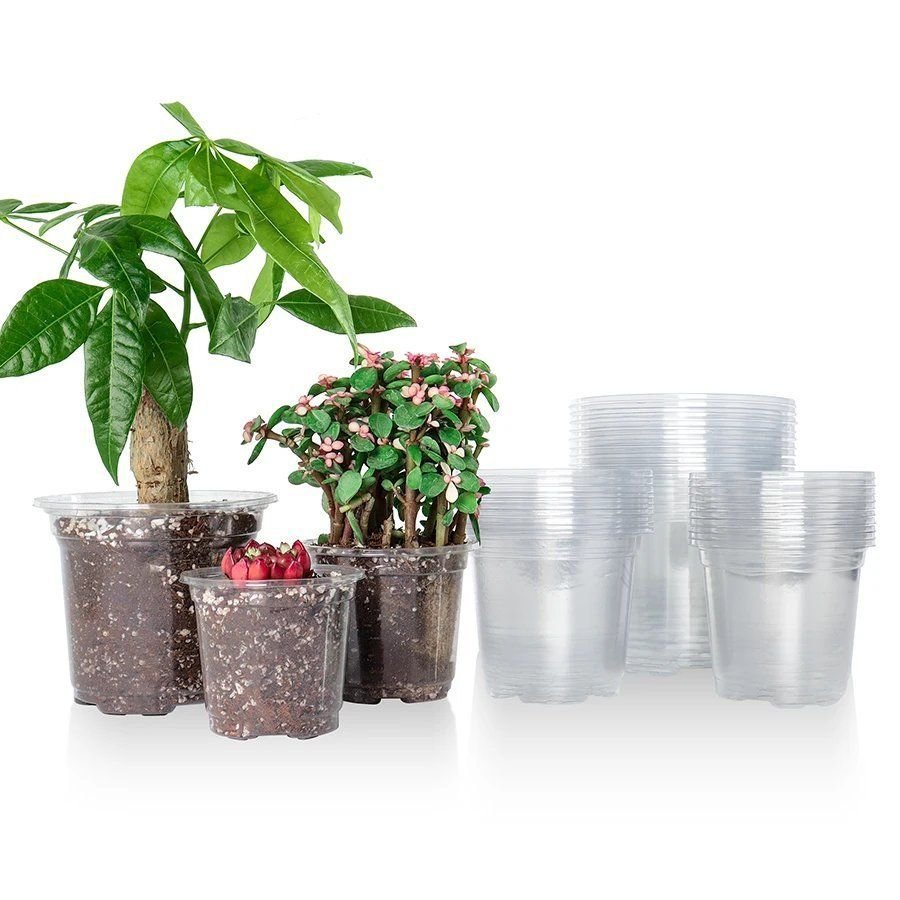
For nursery pots inside a cachepot it is the obvious answer — clear ones let you see root development and moisture level, which is a real advantage. For very large outdoor planters it may be the only sensible option, because the ceramic equivalent would be unliftable.
Modern plastic pots also last. I have some in the studio that are older than my kiln. There is a fuller case for them in the plastic range.
What I would actually buy
Terracotta for herbs and succulents. Glazed ceramic for foliage plants in rooms people sit in. Plastic for propagation, for nursery pots inside covers, and for anything above about 40cm.
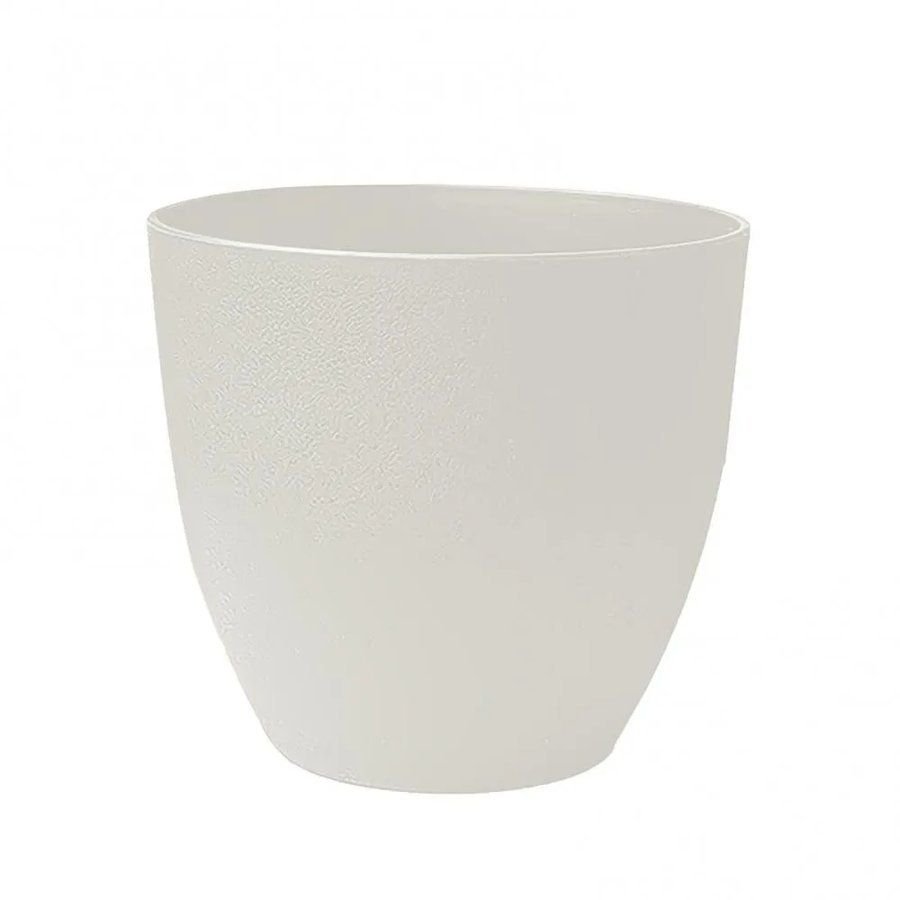
And a stone-look pot where you want the weight and presence of the real thing without the price of it. The materials guide covers metal, wood and rattan too, and the full range has all of it.
The short version
- Porosity is the property that matters: unglazed terracotta breathes, glaze and plastic do not.
- Terracotta suits succulents, cacti and herbs but needs watering more often.
- Glaze is glass - a glazed ceramic pot behaves much more like plastic than like clay.
- Plastic is light, cheap, holds moisture longest and is the sane choice above about 40cm.
- Low-fired terracotta flakes in a British winter; look for frost-proof on outdoor pots.
Frequently asked questions
Is terracotta better than plastic for plants?
Not better, different. Terracotta breathes so compost dries faster, which suits succulents, cacti and herbs. Plastic holds moisture longest, which suits thirsty plants and anyone who waters irregularly. Match the material to the plant.
Why does my terracotta pot have a white crust?
Mineral salts from your tap water and from the compost, drawn out through the porous clay and left on the surface as the water evaporates. It is completely harmless. Scrub it off with a stiff dry brush if you would rather not see it.
Does a glazed pot count as ceramic or as plastic?
Functionally it behaves like plastic. The glaze is a layer of glass that seals the clay, so water can only leave through the drainage hole rather than through the pot wall. That makes glazed ceramic a moisture-retaining pot.
Will terracotta survive outside in winter?
Only if it is fired hard enough. Low-fired garden terracotta absorbs water, which freezes, expands and flakes the surface away. Look for frost-proof or frost-resistant on the label, and raise pots on feet so they do not sit in water.
Are plastic pots bad for the plant itself?
No. Plants grow perfectly well in plastic, which is why virtually every nursery in the country uses it. The considerations are aesthetic and environmental rather than horticultural, plus the fact that plastic holds water longer than clay does.