Quick answer: Terracotta is fired clay left unglazed, so water and air pass through the pot wall. Compost dries faster, which suits succulents, herbs and anything that hates wet feet. The costs are more frequent watering, a heavy pot, and flaking in frost unless it was fired hard.
I have been throwing pots for twenty years and terracotta is still the material I hand people first. It is also the one they most often use wrongly.
What terracotta actually is
Iron-rich clay, fired at a relatively low temperature and left unglazed. The iron is why it is orange.
Because it is unglazed, the clay body stays porous. Water and air move through the wall of the pot, not just through the hole in the bottom.
Every advantage and every drawback below comes from that one property.
The pros
It breathes. Compost dries from the sides as well as the top, so roots get air and are far less likely to sit wet. That is the single biggest cause of houseplant death, and terracotta widens your margin for error — the drainage guide covers why it matters so much.
It is heavy. A nuisance to carry, an advantage under a tall plant that would tip a light pot over.
It ages well. The white bloom, the softening of the colour, the odd chip. Terracotta looks better at ten years old than at one, which almost nothing else in a garden does.
It is cheap. Clay is abundant and the firing is not extreme, so small terracotta pots cost very little.
The cons, honestly
You water more. On a hot windowsill a small terracotta pot can dry in a day. If you are away often, this is the wrong material — a self-watering pot is a better fit.
It is heavy. Same property, other direction. A large terracotta pot full of wet compost is a two-person lift.
It breaks. Dropped, knocked, or frozen.
It stains. Porous clay absorbs mineral salts and, outdoors, algae. Some people call that patina and some call it dirty.
The UK winter problem
This is the part that costs people pots every February.
Porous clay absorbs water. Water expands about a tenth when it freezes. If that happens inside the pot wall, the surface flakes away and eventually the pot splits.
Two labels matter and they are not the same. Frost proof means the clay was fired hot enough to stop absorbing water in any real quantity. Frost resistant means it will probably survive a mild winter in a sheltered spot.
If a pot is staying outside all year, buy frost proof — the frost guide explains how to tell them apart, including the tap test.
Caring for it
- Raise it off the ground. A pot standing in a puddle drinks water through its base. Pot feet are the cheapest insurance there is.
- Soak a new pot before planting. Dry terracotta pulls moisture straight out of fresh compost.
- Expect the white bloom. Mineral salts from tap water coming through the clay. Harmless. Scrub dry, then white vinegar and water if you want it gone.
- Never put it in a dishwasher. Detergent soaks into the clay and stays.
- Bring the good ones in if they are not frost proof.
What to put in it
Anything from a dry place. Succulents, cacti, rosemary, thyme, sage, oregano, pelargoniums, lavender.
What not to put in it: ferns, calatheas and anything that wants constant moisture. They will sulk. Those want glazed ceramic instead, and the materials comparison sets the three side by side.
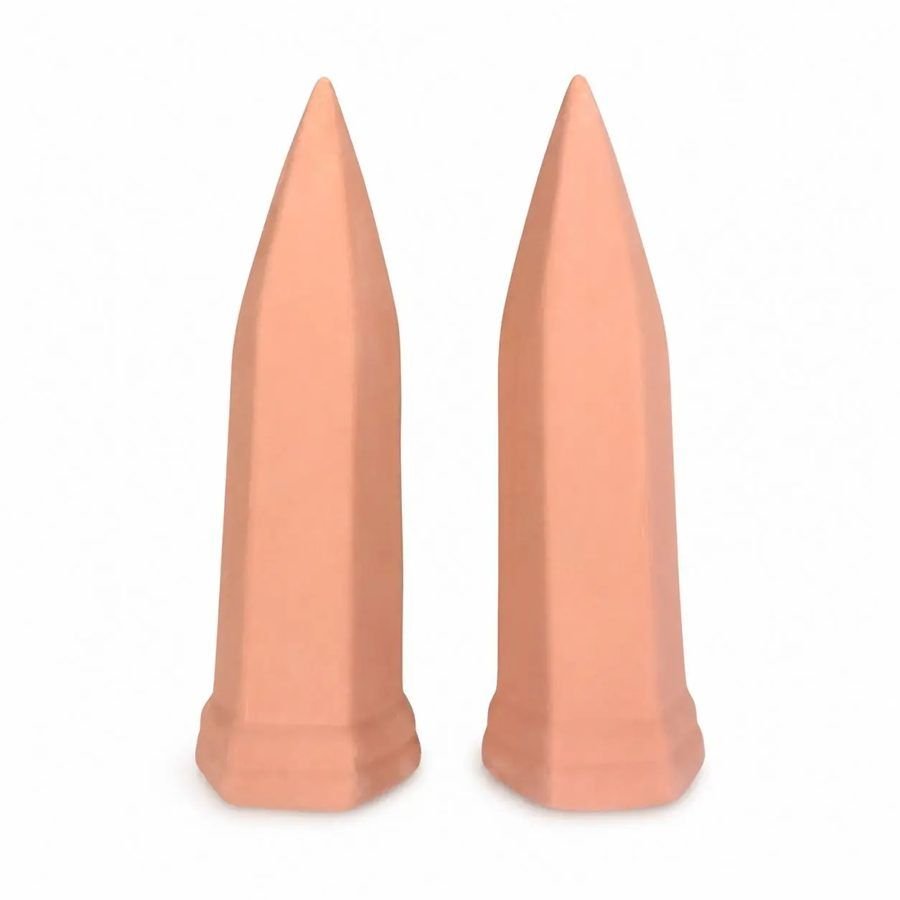
Watering stakes help if you are between the two — terracotta stakes release slowly into the compost.
Buying it
Check the firing (tap it — a clear ring is dense, a dull thud is porous), check the drainage hole is clean, and check the base sits flat.
Browse the terracotta and clay range, and the quality guide covers what else to look at. There is more on materials in the materials pillar guide, and free UK delivery over £20.
Two plants where terracotta is not just a style choice but genuinely the safer pot: olive trees, which must not sit wet over winter, and snake plants, which need the compost to dry out completely.
The short version
- Terracotta is unglazed fired clay, so water and air pass through the pot wall.
- It suits succulents, cacti and Mediterranean herbs, and punishes thirsty tropical plants.
- You will water more often - a small pot on a hot sill can dry within a day.
- Frost proof and frost resistant are different claims; only one survives a hard winter.
- Raise outdoor terracotta on feet, and never put any of it in a dishwasher.
Frequently asked questions
What are the advantages of terracotta plant pots?
The clay is porous, so water and air move through the pot wall and compost dries faster. That gives roots more air and makes overwatering far less likely. Terracotta is also heavy enough to hold a tall plant upright, and inexpensive.
What are the disadvantages of terracotta?
You water more often, because the same porosity that helps roots also dries the compost quickly. The pots are heavy when large, they break when dropped, and unless fired hard they flake apart after a hard frost.
Do terracotta pots survive a UK winter?
Only if they are labelled frost proof, meaning fired hot enough to absorb almost no water. Frost resistant is a weaker claim that usually means a mild winter in a sheltered spot. Raise any outdoor pot on feet so it cannot sit in water.
Why has my terracotta pot gone white?
Mineral salts from tap water and fertiliser drawn through the porous clay and left on the surface as water evaporates. It is harmless and many people like it. Scrub it dry with a stiff brush, then soak in white vinegar and water to remove it.
Which plants suit terracotta best?
Anything that comes from dry ground: succulents, cacti, rosemary, thyme, sage, oregano, lavender and pelargoniums. Avoid ferns, calatheas and other moisture-loving foliage, which do better in glazed ceramic or plastic.