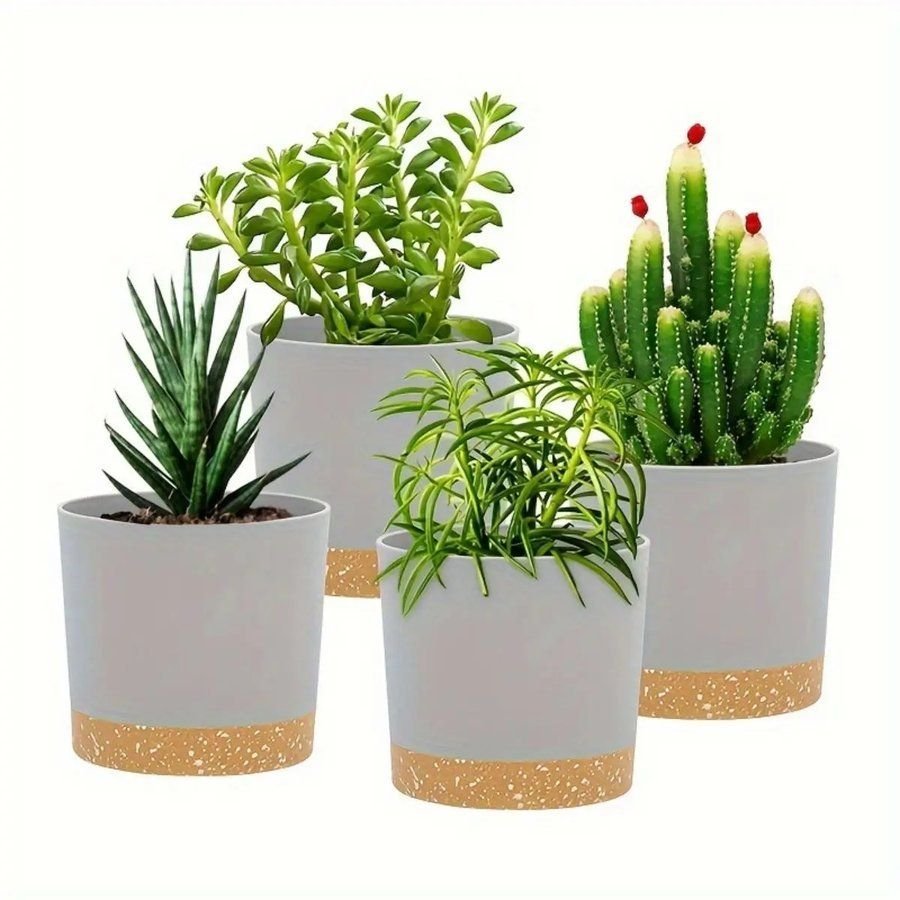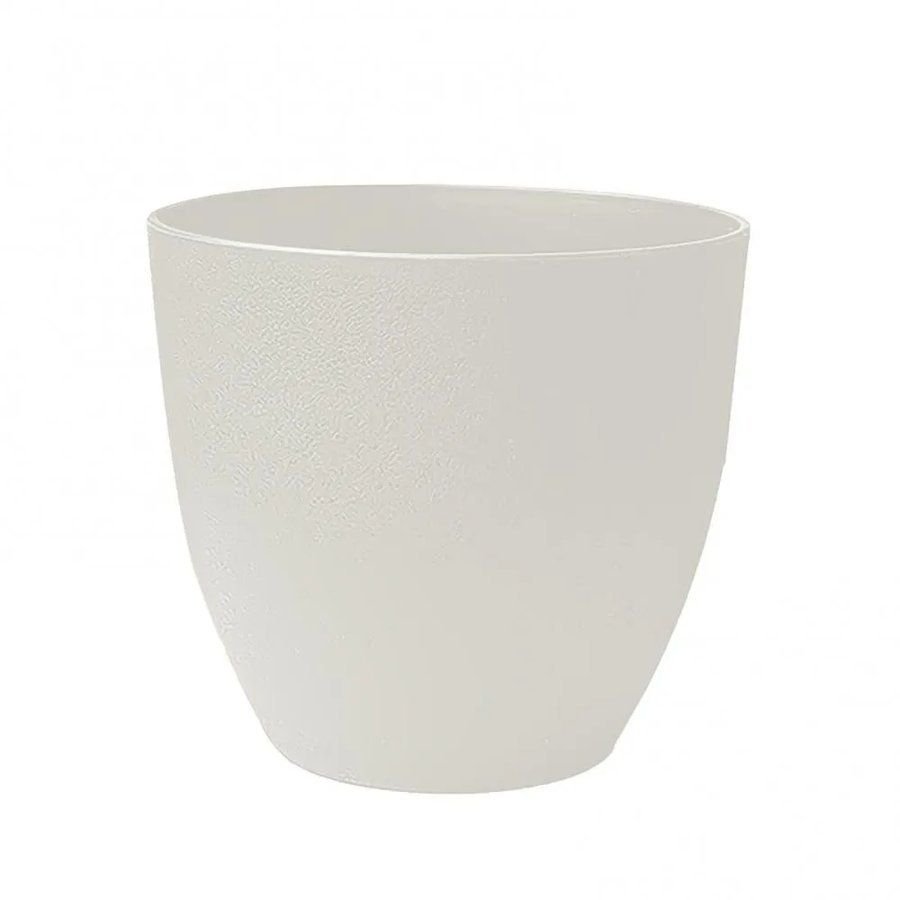
Quick answer: Glazed ceramic is the sensible indoor default: it holds moisture, wipes clean and looks finished in a room in a way plastic does not. Check for a drainage hole, an unglazed foot ring that will not scratch, and a matched saucer. It suits ferns, calatheas and most tropical foliage.
Ceramic is what I specify most in a room, and not only because it photographs well. It behaves in a way that suits how people actually live with houseplants.
Why ceramic suits indoors
A glaze is a layer of glass fused to the clay, so a glazed pot cannot breathe. Water leaves through the drainage hole and nowhere else.
That means compost stays moist for longer, which is exactly right for a room with central heating drying the air, and for anybody who waters once a week rather than on demand.
It also means no white mineral bloom on the outside and no damp ring on your furniture from the pot wall — the two things unglazed terracotta does that people dislike indoors.
What to look for
A drainage hole. Plenty of decorative ceramic has none. That is fine if you are using it as a cover pot, and a problem if you meant to plant into it — the drainage guide covers both.
An unglazed foot ring. A properly made pot has a bare ring on the base, because glaze would fuse it to the kiln shelf. That ring is porous, so use a saucer or feet on wood.
An even glaze. No bare patches, no crawled areas where it has pulled away. Pinholes are common and cosmetic.
Weight for size. Suspiciously light means thin walls, which chip at the rim — the quality guide covers the checks.
Which plants suit it
Anything that wants steady moisture. Ferns, calatheas, peace lilies, marantas, most tropical foliage.
What does not: succulents, cacti, and Mediterranean herbs, which want to dry out between waterings and will sit wet in a glazed pot. Those want terracotta — the terracotta guide explains why.
Sizing and shape
Three to five centimetres wider than the current pot when repotting, one to two when using it as a cover — the cm chart has the ladder.
Shape matters more than people think indoors. A pot wider at the base than the rim is far harder to knock over, which matters on a shelf or near a cat. Tall narrow pots look elegant and topple.
Colour
Match the undertone of the room rather than the exact shade. A warm room with cream walls takes off-white, sand and oatmeal. A cool grey room takes true white, pale grey and black.
Bright white in a warm room reads as cold rather than crisp. And a set of matching pots does more for a shelf than four individually nice ones — the styling guide covers grouping, and a quartet is the easy version.
The ones I would actually buy
For a windowsill or shelf, a matched set — repetition is what makes a group read as deliberate.
For a single plant in a room you use, something with a matched saucer so the whole thing looks finished. A fluted pot and saucer is a clean example, and there are more in pot and saucer sets.
For a floor plant, weight low down. A stone-look pot gives you the presence without the price of solid stone.
Browse the ceramic range and indoor pots, with more in the indoor styling guide. Big indoor pots covers the larger end.
The short version
- Glaze is glass, so ceramic holds moisture - the right default for indoor foliage.
- Check for a drainage hole, an unglazed foot ring, an even glaze and honest weight.
- It suits ferns, calatheas and peace lilies; succulents and herbs want terracotta instead.
- A pot wider at the base than the rim is far harder to knock off a shelf.
- Match the room's undertone, and let a matching set do the work on a windowsill.
Frequently asked questions
Are ceramic pots good for indoor plants?
For most of them, yes. The glaze seals the clay so compost stays moist longer, which suits tropical foliage and anyone who waters weekly rather than on demand. It also avoids the white bloom and damp rings unglazed terracotta causes indoors.
Which plants suit ceramic pots?
Anything that likes steady moisture: ferns, calatheas, peace lilies, marantas and most tropical foliage. Succulents, cacti and Mediterranean herbs do not, because they need to dry out between waterings and will sit wet in a sealed pot.
Do ceramic pots have drainage holes?
Many decorative ones do not, so check rather than assume. A pot without a hole is fine used as a cover with a nursery pot inside, but planting directly into it leaves water at the base with nowhere to escape.
Will a ceramic pot mark my furniture?
It can. A well-made glazed pot has an unglazed foot ring on the base, because glaze would fuse the pot to the kiln shelf, and that bare ring is porous. Use a saucer, and add feet under anything heavy.
What colour ceramic pot should I choose?
Match the room's undertone rather than the exact shade. Warm rooms with cream walls suit off-white, sand and oatmeal; cool grey rooms suit true white, pale grey and black. A bright white pot in a warm room reads as cold.