Quick answer: Limit yourself to two or three pot finishes across a room, vary the heights so the eye moves, group in odd numbers, and leave real gaps between groups. Clutter is rarely about how many plants you own. It is about too many competing finishes and no empty space between them.
I style rentals and holiday lets for a living, which mostly means making other people's rooms feel warm without spending much.
Plants do that faster than almost anything. Badly chosen pots undo it just as fast.
Clutter is not a quantity problem
You can have twenty plants in a room and have it read as calm. You can have five and have it read as a jumble.
The difference is almost never the number. It is how many different finishes are competing, and whether there is any empty space between them.
Rule one: limit the palette
Pick two or three pot finishes for a whole room and stick to them.
A workable set: one neutral ceramic, one natural texture such as seagrass or rattan, one accent. That is enough variety to be interesting and few enough to read as intentional.
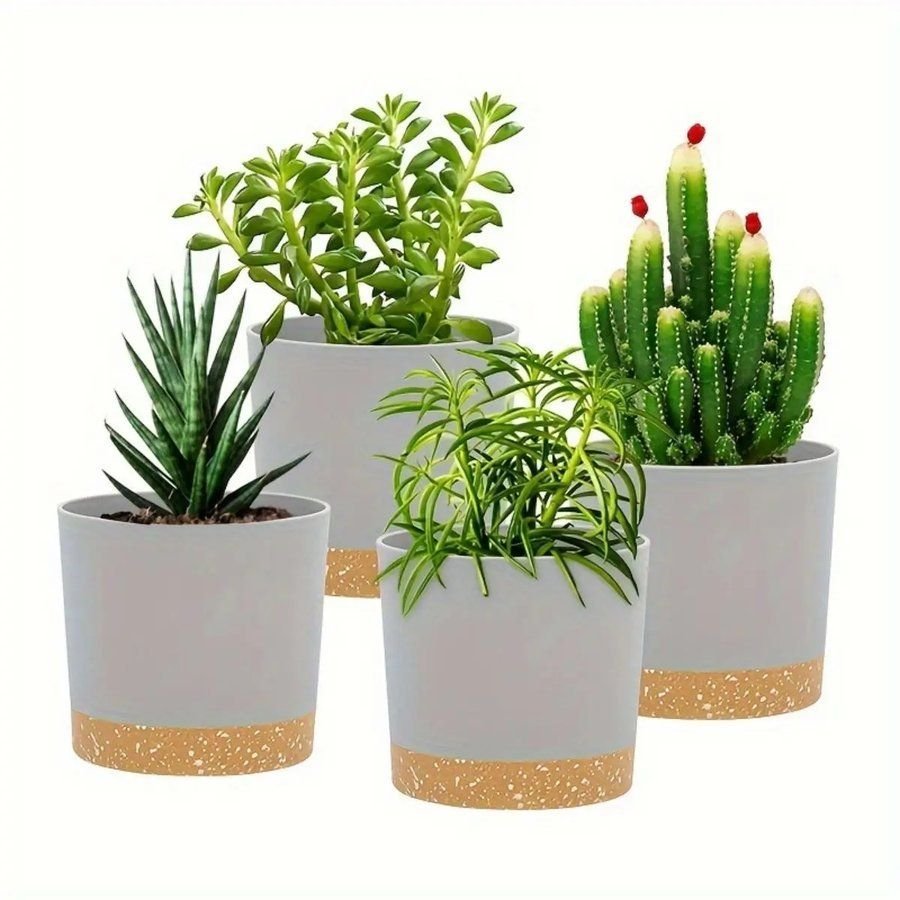
What creates visual noise is six pots in six unrelated colours. A set of four matching pots does more for a shelf than four individually nice ones, and there is more on this in the indoor styling guide.
Rule two: vary the height
Pots all at the same level make a flat line and the eye slides straight past.
You want a tall one, a medium one, a low one. Height comes from three places: the plant, the pot, or a stand.
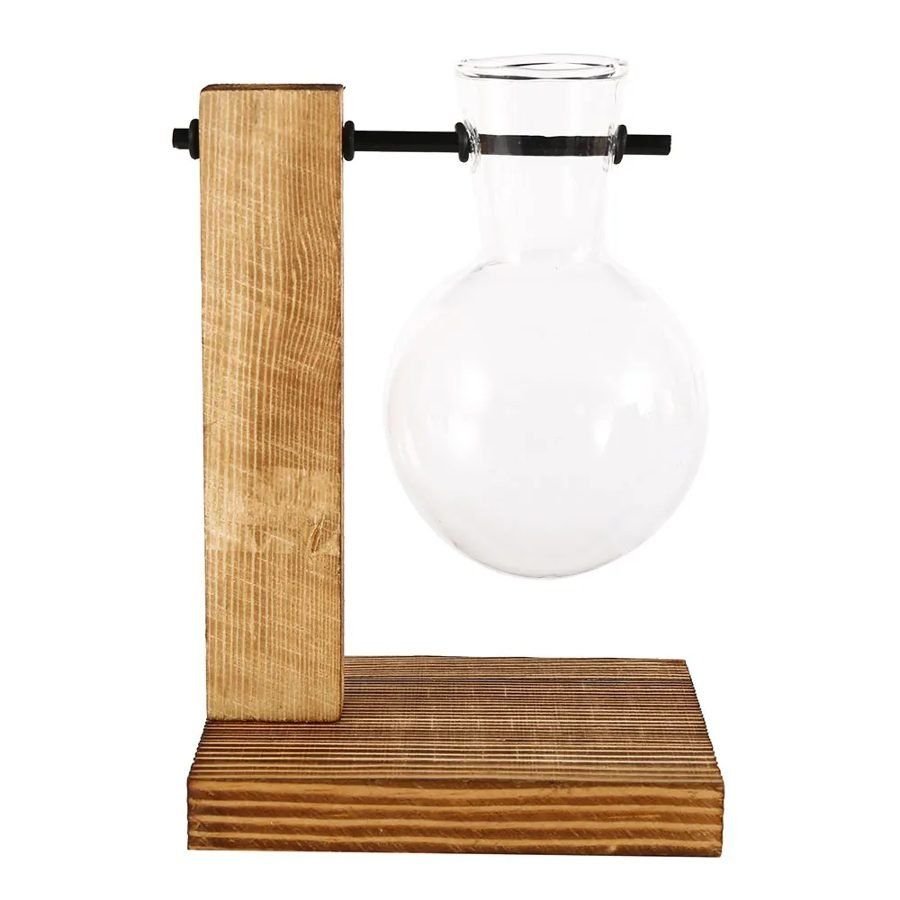
Stands are the underrated one — they lift a small plant into the middle of a composition without you having to own a bigger plant. There is a range in pots with stands, and a bulb vase stand does the job in a small footprint. Tall planters handle the other end.
Rule three: odd numbers, and touching
Three or five, not two or four. It is an old display rule and it holds because an odd group has a centre and an even one splits into pairs.
Group them close enough that the pots almost touch. A cluster reads as one object. The same plants spread evenly along a shelf read as clutter, every time.
Rule four: leave gaps
The hardest one, because a shelf with space on it feels unfinished while you are arranging it.
It is not. The empty stretch is what makes the group beside it read as deliberate. Fill every surface and nothing has any emphasis.
My rough measure is about a third of any shelf left clear.
The cover pot trick
You do not have to repot anything to make a room look coordinated.
Leave plants in their nursery pots and drop them into cover pots you have chosen to match. It is faster, cheaper, and far kinder to the plant than repotting for aesthetic reasons — the sizing guide explains why unnecessary repotting is a setback.
Baskets are the easiest version. A seagrass belly basket softens a corner instantly, and the rattan and wicker range is full of that. Just put a saucer inside first — natural fibre and water do not mix.
Where to put things
Corners, because a plant fixes a dead corner better than furniture does. Beside a sofa arm. On top of a bookcase where something can trail down.
Bathrooms and kitchens, which usually get forgotten and where the humidity actually suits the plants.
And do not line pots up along a windowsill like a parade. Cluster two or three at one end instead. Small pots suit that — the small pot range and indoor pots are the places to browse.
The short version
- Clutter comes from competing finishes and no empty space, not from owning too many plants.
- Limit a room to two or three pot finishes: one neutral, one natural texture, one accent.
- Vary height using the plant, the pot or a stand, and group in odd numbers close together.
- Leave roughly a third of any shelf clear - the gap is what makes the group read as deliberate.
- Use cover pots rather than repotting for looks; unnecessary repotting sets a plant back.
Frequently asked questions
How many plant pots is too many in one room?
There is no number. A room with twenty plants can read as calm and a room with five can read as a jumble. What creates clutter is too many competing pot finishes and no empty space left between the groups.
Should all my plant pots match?
Not all, but limit yourself to two or three finishes across a room. A neutral ceramic, a natural texture such as seagrass or rattan, and one accent is a good working set. Six pots in six unrelated colours is what looks chaotic.
How do I add height to a plant display?
From the plant, the pot or a stand. Stands are the most useful because they lift a small plant into the middle of a composition without you needing to buy a bigger plant. Aim for a tall, a medium and a low in each group.
Why group plants in odd numbers?
An odd group has a natural centre, while an even one visually splits into pairs. Group them close enough that the pots almost touch, so the cluster reads as a single object rather than as several separate things spread out.
Can I put a plant straight into a basket?
Not without protection. Natural fibres such as seagrass, rattan and jute rot when they stay damp. Sit the plant's nursery pot on a saucer inside the basket, or use a plastic liner, so water never touches the weave.