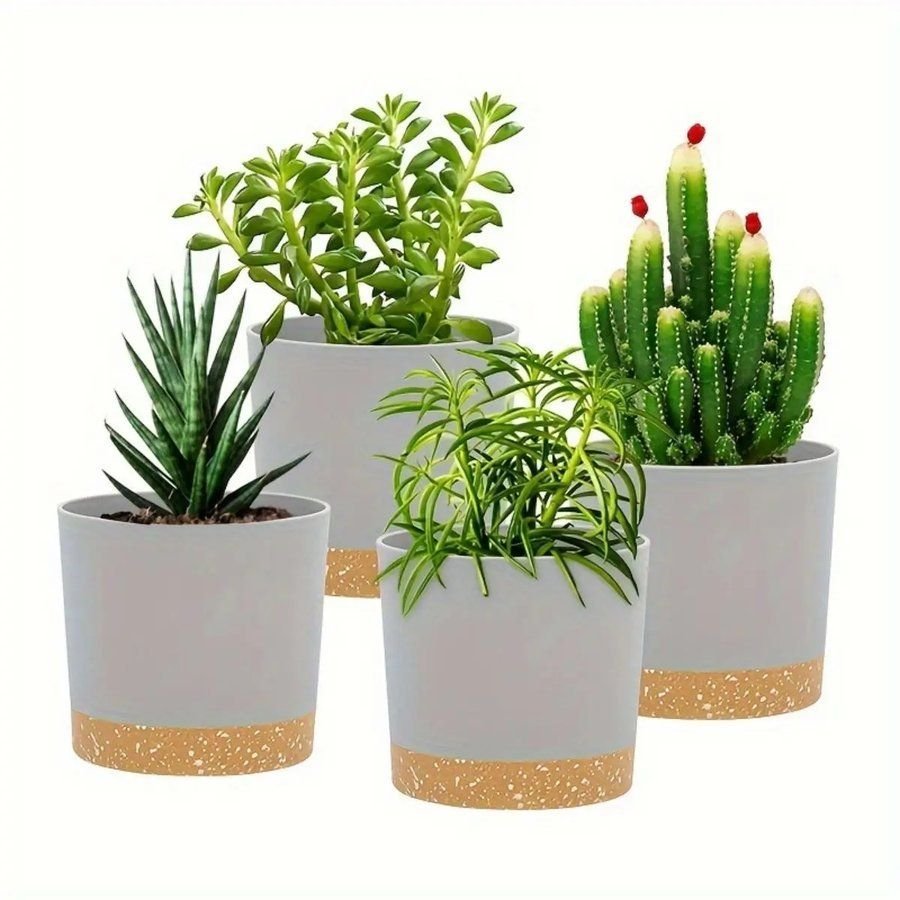
Quick answer: Ceramic means clay fired hard enough to become permanent. Glazing seals the surface so the pot holds moisture; leaving it bare keeps it porous. Firing temperature decides whether it survives frost, and the foot ring is left unglazed because glaze would fuse the pot to the kiln shelf.
People buy ceramic on looks and then wonder why one pot survives the garden and another shatters in January. It comes down to how it was made.
What makes a pot ceramic
Clay, shaped, dried, then fired hot enough that the change is permanent. Below about 600 degrees clay is still clay and will dissolve in water. Above it, it will not.
What varies enormously is how much hotter than that a pot goes, and that decides almost everything about how it behaves.
Earthenware, stoneware, porcelain
| Type | Fired to | Behaves like |
|---|---|---|
| Earthenware | Lower | Porous, absorbs water, cheap. Terracotta is this. |
| Stoneware | Higher | Dense, absorbs almost nothing, frost proof |
| Porcelain | Highest | Very dense, fine, rarely used for garden pots |
That table is the whole reason a "ceramic" pot may or may not survive outside. Ceramic is a category, not a specification — the frost guide covers how to test what you have.
What the glaze does
A glaze is glass, melted onto the clay in the kiln. It is not a paint and it does not wear off.
It seals the surface completely, so water can only leave through the drainage hole. That turns a porous earthenware pot into a moisture-retaining one, which is why a glazed pot behaves more like plastic than like unglazed terracotta.
Glaze also makes a pot wipeable, which matters in a kitchen or bathroom, and it is where the colour lives.
Why the inside is often bare
Deliberate, not lazy. You get the finish and the cleanability where it shows while the clay can still breathe a little from within.
The catch is frost. Water soaks into the bare inside, freezes, and pops the glaze off the outside in sheets. A glazed pot is only reliably frost proof if the body underneath is stoneware.
Why the base ring is unglazed
Because molten glass sticks. A pot glazed right across the base would fuse to the kiln shelf and be destroyed coming off it.
So a properly made pot has a bare foot ring. That ring is porous, so it can pass moisture to a wooden floor — use a saucer, or feet. A pot with a fully glazed base was fired on stilts and often has sharp marks that scratch furniture.
Crazing
The fine web of cracks that appears in some glazes, sometimes years later. It happens when the glaze and the clay body expand at slightly different rates.
On a plant pot it is cosmetic, and plenty of people like it. It does mean the glaze is no longer a perfect seal, so a crazed pot behaves a little more like an unglazed one.
Judging one in your hands
Tap it. A clear ring means dense and hard fired. A dull thud means porous. A buzz can mean a hairline crack.
Weigh it for its size — thin walls chip at the rim and crack under root pressure. Check the foot ring sits flat and is free of sharp grit. The quality guide has the full ten-second check.
Where it suits
Indoors, almost anywhere, and it is the default I would recommend for foliage plants — the indoor ceramic guide covers picking one.
Outdoors, only if it is genuinely frost proof, and always raised off the ground — the outdoor range flags which is which.
Browse the ceramic range, or the full range if you are still deciding. There is more in the materials pillar guide, and a matched pot and saucer is the tidiest indoor answer.
The short version
- Ceramic is a category, not a specification - firing temperature decides how it behaves.
- Earthenware is porous and cheap; stoneware is dense and frost proof.
- Glaze is fused glass: it seals the pot, so a glazed pot holds moisture like plastic.
- The bare foot ring exists because molten glaze would fuse the pot to the kiln shelf.
- Crazing is cosmetic, though the glaze is then no longer a perfect seal.
Frequently asked questions
What is the difference between earthenware and stoneware?
Firing temperature. Earthenware is fired lower, stays porous and absorbs water, which is what terracotta is. Stoneware is fired much hotter until it vitrifies, absorbs almost nothing and therefore survives frost.
What does a glaze actually do?
It is glass melted onto the clay in the kiln, so it seals the surface permanently. Water can then only leave through the drainage hole, which makes a glazed pot hold moisture much more like plastic than like unglazed clay.
Why is the bottom of my ceramic pot unglazed?
Because molten glaze sticks, and a fully glazed base would fuse the pot to the kiln shelf. The bare foot ring is normal and correct, but it is porous, so stand the pot on a saucer or feet if it is going on wood.
Is crazing in a glaze a fault?
It is cosmetic on a plant pot, and many people like the effect. It happens when glaze and clay expand at slightly different rates. It does mean the glaze no longer seals perfectly, so the pot behaves a little more like unglazed clay.
Are all ceramic pots frost proof?
No, and this is the most common misunderstanding. Ceramic covers everything from soft earthenware to dense stoneware. Only a hard-fired stoneware body reliably survives frost, and a glaze on a soft body offers no protection at all.