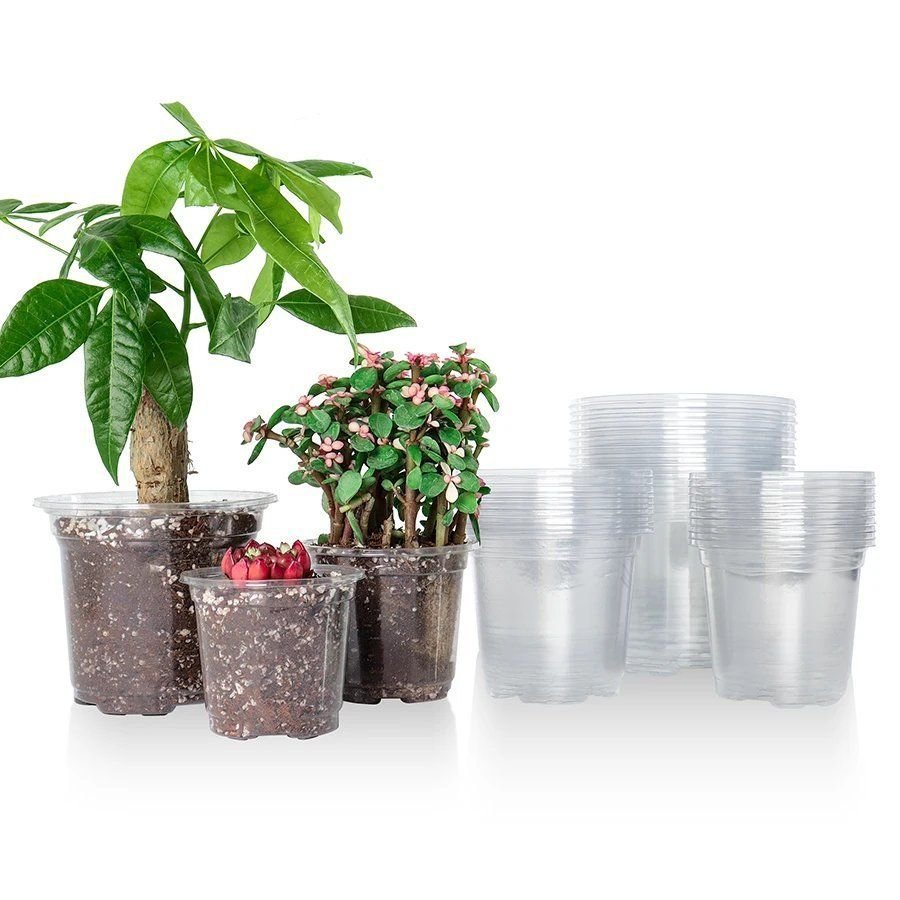
Quick answer: For the plant, no. Every commercial nursery in the country grows in plastic because it works. The real arguments against are environmental and aesthetic, not horticultural. Plastic holds moisture longest, weighs almost nothing, and is often the only sensible option at large sizes.
Thirty years on an allotment and I have never once seen a plant care whether its pot was fashionable.
Plastic gets a hard time. Some of it is fair. Most of it is not.
The horticultural case
Plastic is not porous, so water leaves only through the drainage hole. Compost stays wetter for longer.
That is a genuine advantage for thirsty plants, for anyone who waters irregularly, and for a greenhouse in July where a terracotta pot dries out in a morning.
It is a disadvantage for succulents, cacti and anything Mediterranean, which want to dry out between waterings. The materials comparison sets the three side by side.
That is the whole horticultural argument. Everything else is about something other than the plant.
Where plastic is simply the right answer
Nursery pots. Light, cheap, and they let roots out easily at repotting. Clear ones go further and let you see the roots and the moisture level without disturbing anything, which is genuinely useful.
Anything very large. A 50cm ceramic planter full of wet compost is close to unmovable. The plastic equivalent can be shifted by one person — the big planters lean this way for good reason.
Balconies and roof terraces, where the structure has a weight limit you should respect.
Propagation and growing on. Nobody is looking at it, and you need forty of them.
Grow bags for potatoes and root veg, which are the plastic-adjacent option that outperforms rigid pots for the job — these are what I use.
Where it genuinely falls down
Cheap thin plastic goes brittle in UV. Two summers on an exposed patio and it shatters when you pick it up.
That is the real environmental problem: not plastic as a material, but plastic thin enough to become waste within a couple of years.
Thick, UV-stabilised plastic lasts decades. I have pots on the plot older than some of the plot holders.
Black plastic and heat
One real drawback. Black plastic in full sun gets hot enough to damage roots at the pot wall.
On a south-facing patio, use a lighter colour, or put the plastic pot inside something else. Terracotta and stone-look pots stay markedly cooler — this sort of thing works as a cover.
Recycling, honestly
Black plastic pots have historically been hard to sort because the sorting machinery cannot see them. Taupe and green pots are increasingly used for that reason.
Many garden centres take pots back regardless of colour. That is a better route than kerbside for most people. Check locally rather than assuming.
The most useful thing you can do is simply keep them. A stack of clean nursery pots is worth having, and the accessories range covers what you need to clean them properly.
The look
This is where I concede. A plastic pot in a sitting room does look like a plastic pot.
But that is what cachepots are for. Nursery pot inside a basket or a ceramic cover, and you get plastic's watering behaviour with none of its appearance — the approach in the styling guide, using rattan and wicker or ceramic over the top.
Browse the plastic range if you want the functional version, and the materials guide covers everything else.
The short version
- Plants grow perfectly well in plastic - every commercial nursery uses it.
- Plastic holds moisture longest, which suits thirsty plants and irregular waterers.
- It is often the only sensible option above about 40cm, and on weight-limited balconies.
- Black plastic in full sun gets hot enough to damage roots at the pot wall.
- The real problem is thin plastic that goes brittle in UV within two summers, not plastic itself.
Frequently asked questions
Are plastic pots bad for plants?
No. Every commercial nursery in the country grows in plastic because it works. It holds moisture longer than clay, which suits thirsty plants and irregular watering, and is less suitable for succulents and cacti that want to dry out.
When should I choose plastic over ceramic?
For nursery pots, for anything above roughly 40cm where the ceramic version would be unmovable, on balconies with a weight limit, and for propagation where you need many pots and nobody is looking at them.
Do black plastic pots get too hot?
In full sun they can, hot enough to damage roots against the pot wall. On a south-facing patio use a lighter colour, or sit the plastic pot inside a terracotta or stone-look cover, which stays markedly cooler through the day.
Can plant pots be recycled?
Black ones have historically been difficult because sorting machinery cannot detect them, which is why taupe and green pots are increasingly common. Many garden centres take pots back regardless of colour, which is usually better than kerbside collection.
How long do plastic pots last?
Thin, cheap plastic can go brittle in UV within a couple of summers and then shatters when handled. Thick, UV-stabilised plastic lasts decades. The material is not the problem; the wall thickness and the UV treatment are.