Quick answer: Tall planters screen a boundary faster than any fence you can get permission for. Plan on the planter being about a third of the finished height, weight the base properly because they act as sails, and plant evergreens if you want cover in January as well as July.
On the allotment and at home, tall planters are what I use when I want a screen and I want it this season rather than in three years.
What they are actually for
Three jobs, and it is worth knowing which one you are doing.
Screening. Blocking a view in or out. Needs height and density.
Structure. Giving a flat patio some vertical interest so it does not read as a car park. Needs shape more than height.
Zoning. Splitting a space — dining end from lounging end — without building anything.
Getting the height right
The planter is part of the height, and people forget that.
Rough rule: the planter is about a third of the finished height and the plant is the other two thirds. So a 60cm planter with a 1.2m shrub gives you a screen approaching 1.8m, which is enough to block a standing sightline.
Browse the tall planter range and work out the height you actually need first. To screen a seated view you need far less than to screen a first-floor window, and over-screening makes a small garden feel like a corridor.
The thing that goes wrong: wind
A tall planted container is a sail on a narrow base. It will go over, and it usually takes the plant with it.
Three fixes.
Weight low down. Do not hollow out the base with polystyrene in an exposed spot, tempting as that is on a big planter. Put real ballast at the bottom — gravel or heavy compost — and save the weight saving for somewhere sheltered.
A wide base. A planter wider at the bottom than the top is far more stable than a straight-sided one, which is in turn far better than one that flares outward.
Group or anchor them. A row of planters touching each other braces itself. Against a wall is better than free-standing.
Drainage and weight, before you fill it
Position it first. A tall planter full of wet compost is not moving afterwards without help.
Multiple drainage holes, and raise it on pot feet so water leaves rather than pooling — the same reasoning as winter-proofing any patio pot.
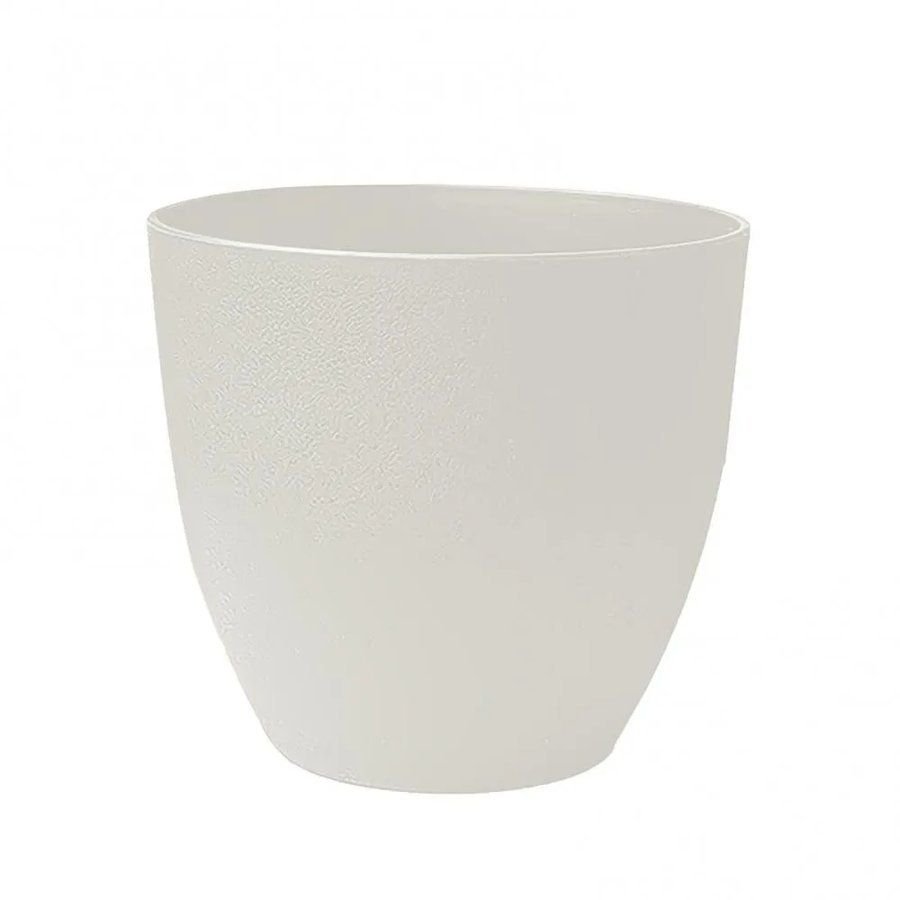
Material matters at this size. A fibreclay stone-look planter gives you the presence of stone at a fraction of the weight, which is usually the right compromise. Real ceramic at 80cm is close to immovable and cracks if it freezes wet.
What to plant
For year-round screening you need evergreen. Deciduous shrubs give you a screen in July and a row of sticks in January, which is rarely what people wanted.
- Bamboo — fast, dense, and containers are the sensible way to grow it because it spreads aggressively in open ground.
- Photinia and pittosporum — evergreen, tolerant of pots, easy to keep to a shape.
- Ornamental grasses — movement and light rather than solid cover.
- Climbers on a trellis in the planter, which gets height from a smaller root ball.
Whatever you choose, remember a container restricts root run, so anything in a tall planter needs more watering and more feeding than the same plant in the ground.
Maintenance, honestly
Tall planters dry out faster than they look like they should, because there is a lot of leaf above a modest volume of compost.
Check them in summer far more often than you would a low pot. A reservoir helps — self-watering pots exist for exactly this kind of demand.
And top dress each spring rather than repotting a large established shrub, which is a job nobody enjoys.
Browse tall planters and large garden planters, with more in the outdoor pillar guide. The large planter guide covers the wider end, and the tree planter guide the biggest.
The short version
- Count the planter as about a third of the finished screening height.
- A tall planted container is a sail: keep real weight low down, especially in exposed spots.
- A base wider than the rim is far more stable than a straight or flared one.
- Evergreens give a screen in January; deciduous shrubs give you sticks.
- Tall planters dry out faster than they look, because there is a lot of leaf per litre of compost.
Frequently asked questions
How tall should a planter be for privacy screening?
Work backwards from the sightline you want to block. The planter usually contributes about a third of the finished height and the plant the other two thirds, so a 60cm planter with a 1.2m shrub screens to roughly 1.8m.
Why do tall planters blow over?
Because a tall plant on a narrow base acts as a sail. Keep real weight low in the planter rather than hollowing out the base, choose a shape wider at the bottom than the top, and group planters together or set them against a wall.
What should I plant in a tall outdoor planter?
Evergreens if you want cover all year: bamboo, photinia, pittosporum. Ornamental grasses give movement rather than solid screening, and a climber on a trellis achieves height from a smaller root ball. Deciduous shrubs leave you bare in winter.
What material is best for a tall planter?
Fibreclay or a stone-look composite usually, because it has the presence of stone at a fraction of the weight. Real ceramic at that size is close to immovable once filled and will crack if it freezes while wet.
Do tall planters need more watering?
Yes, noticeably. There is a large amount of leaf above a fairly modest volume of compost, so they dry out faster than their size suggests. Check them far more often than a low pot in summer, or use a planter with a reservoir.